
Stop changing tools
This author still uses DOS. You don't need a new IDE.

George R. R. Martin is considered one of the most commercially successful fantasy writers in history. His A Song of Ice and Fire series has sold more than 100M copies and turned into one of the most loved franchises ever made.
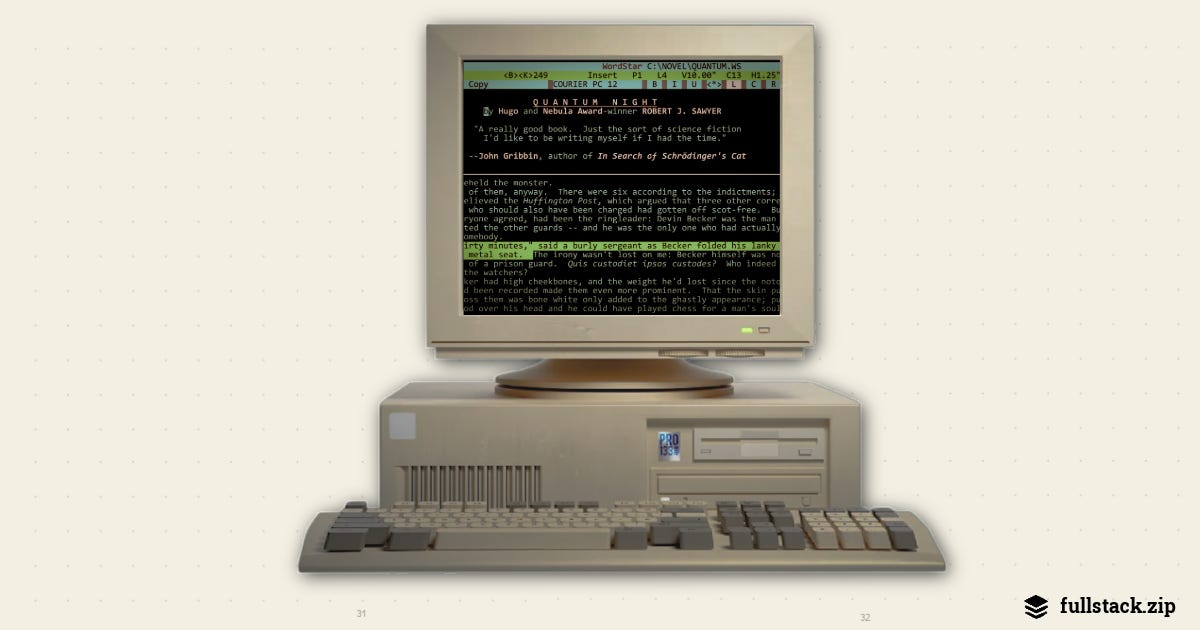
What people don’t know is that his books are written on a DOS machine running WordStar 4.0, a VBA word processor that dominated in the 80s thanks to its portability and WYSIWYG interface. Slow revisions, kludgey code, and corporate drama slowed progress long enough for Word to dethrone WordStar as the corporate standard. After a failed merger and relaunch, WordStar was officially abandoned in 1992.
So why does he still use it thirty years later?
Because it works.
It does everything I want a word processing program to do, and it doesn’t do anything else. I don’t want any help. I hate some of these modern systems where you type a lowercase letter and it becomes a capital. I don’t want a capital. If I wanted a capital, I would’ve typed a capital. I know how to work the shift key!
— GRRM.
Lessons
George’s preference for less is refreshing in an era obsessed with more.
Young carpenters might lose some sleep researching the benefits of Milwaukee vs DeWalt tools, while mechanics compare Gearwrench to Ryobi. But then they wake up, buy a set, and use those tools until they die.
We digital craftsmen, on the other hand, will try five IDEs and LLMs in a week. It’s easy to rationalize this schizophrenic adoption as an attempt to keep our skills sharp. But that mindset reveals a mistaken understanding of our role in the world.
It’s not about the tools, it’s about what you create with them.
Carpenters translate ideas into houses. They can do that with a nail and hammer, or a cordless track saw with an attached vacuum bag.
Writers translate ideas into words. They can do that with a DOS machine running WordStar 4.0, a phone with the Notes app, or pen and paper.
Coders translate ideas into code. They can do that with an agent window, vi and a keyboard, or ChatGPT and their voice.
Examples
Pieter Levels continued to write plain HTML, CSS, SQLite, and PHP in Sublime Text long after VS Code became the standard IDE. His friends made fun of him for his outdated tools. His followers pointed out the superiority of TypeScript and Docker. Yet he focused on his users and products long enough to generate $3M ARR with an ancient stack.
René Rebe codes in a single terminal with vi and basic motions. That elementary setup helped him focus on the code long enough to write a USB driver from scratch in three hours.
$LOUD_ENGINEER_ON_X uses NeoVim, configured through LazyVim, with a fully customized setup that auto-provisions via dotfiles managed by Chezmoi, stored in a private self-hosted Forgejo Git server running on a home Kubernetes cluster. His workflow is so “optimal” that he sells a course to young engineers on how to replicate it. (He hasn’t shipped anything helpful for normal people in years.)
Which type of engineer do you want to be?
If you want to be like the last engineer, then keep jumping on whatever new VC-backed tool shows up on your feed this week.
If you want to be like the first two, your path is much simpler:
Use simple tools that do a few things well. Really, just pick any IDE, calendar, task app, and OS and don’t overthink it.
Keep using that tool until it breaks or your craft suffers.
“BuT tEcH mOvEs So FaSt. I nEeD to sTaY rElEvAnT!”
Yes, occasionally a truly innovative tool appears that is so superior it’d be questionable to resist it (think: computer vs. typewriter). Between those paradigm shifts, a constant stream of “new” tools appears, each overhyping its benefits, downplaying its costs, and distracting you from your craft.
You’ll know when a paradigm shift is happening, and you’ll have plenty of time to transition. You’re not jeopardizing your career by moving to the right of the adoption curve.
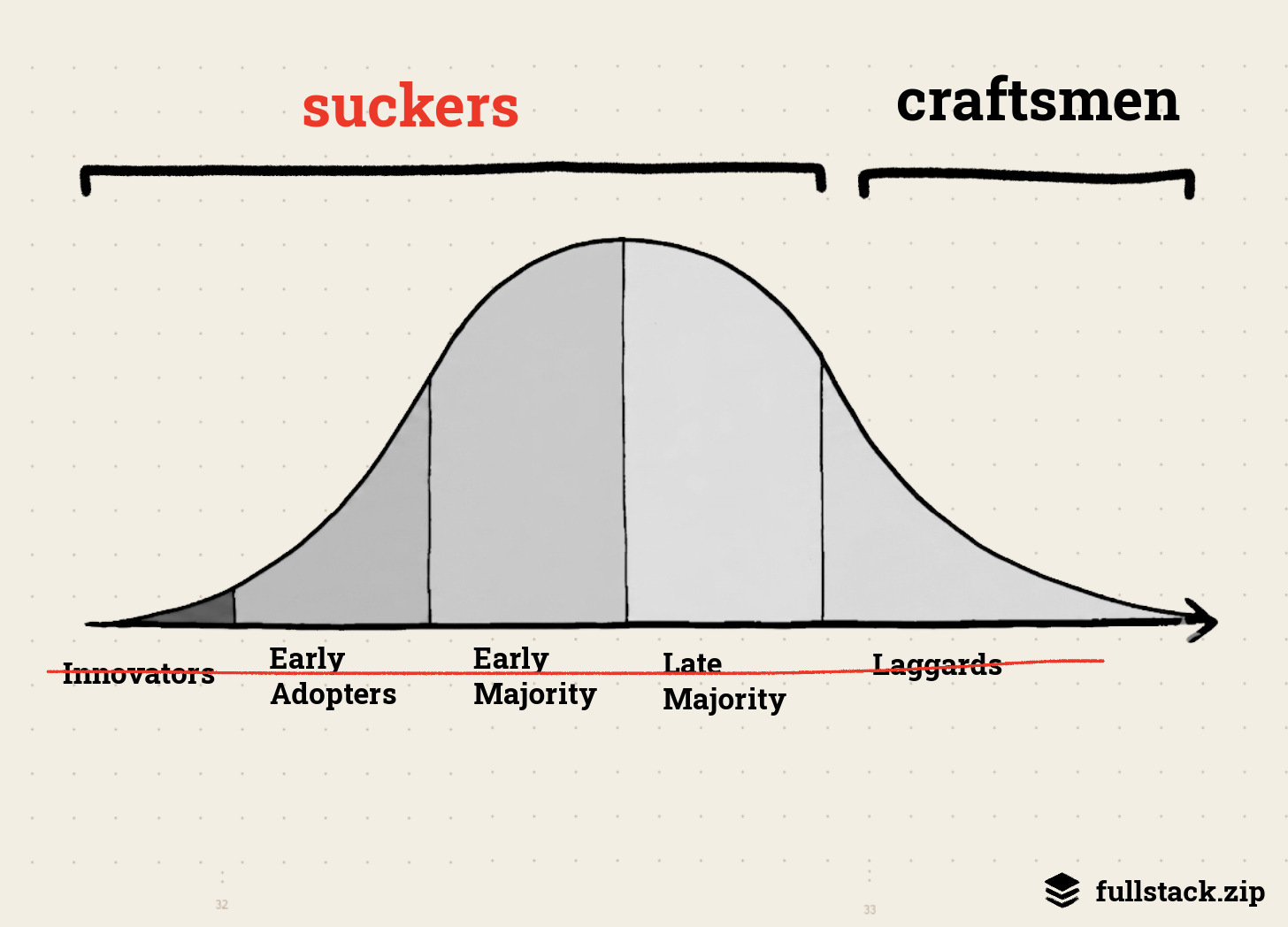
The real risk is maintaining a greater allegiance to novelty than to your craft.
When GRRM’s old computer finally died, he had his assistant build a state-of-the-art computer for him….so that he could run DOS and WordStar 4.0.
WordStar shipped seven versions after 4.0. Instead of using this computer upgrade as an opportunity to try the latest version from 1994, he stuck with the 1987 program that he already mastered.
One of the most successful living writers demands simplicity. He wants his tool to do a few things well and let him handle the rest.
Let’s make George proud.
Close social media.
Open whatever IDE you’re already used to.
And get to work.
More
Interview with James Corey (lightspeedmagazine) | GRRM’s assistant
The best engineer doesn’t have the best setup (fullstack.zip)
A Tour of Word Star 4.0 (youtube)
WordStar (wikipedia)