
Simple is smart
An engineer, architect, and aviator agree

There’s a tempting assumption that intelligence and complexity go hand in hand — that the smarter the person, the more elaborate their work.
I find the opposite to be true.
The people who understand something most deeply are usually the ones working hardest to make it simpler.
Smart people simplify
Tim Berners-Lee understood the web as a common place for data to be shared. He could’ve flaunted his intellect by building this place with Turing-complete programming languages like Haskell or C++. But those would’ve made it harder to work with and share information. Simpler languages, on the other hand, were easier to understand and write. You can combine a handful of HTML tags to have a website. CSS won’t store your data, but a few intuitive keywords will add some visual pop.
The internet grew because its languages were simple enough for normal people to use.
Indeed, on the Web, the least powerful language that’s suitable should usually be chosen.
— Tim Berners-Lee, The Rule of Least Power (w3)
BTW - Tim documented seven principles of design for himself. Five of them are about simplicity (w3).
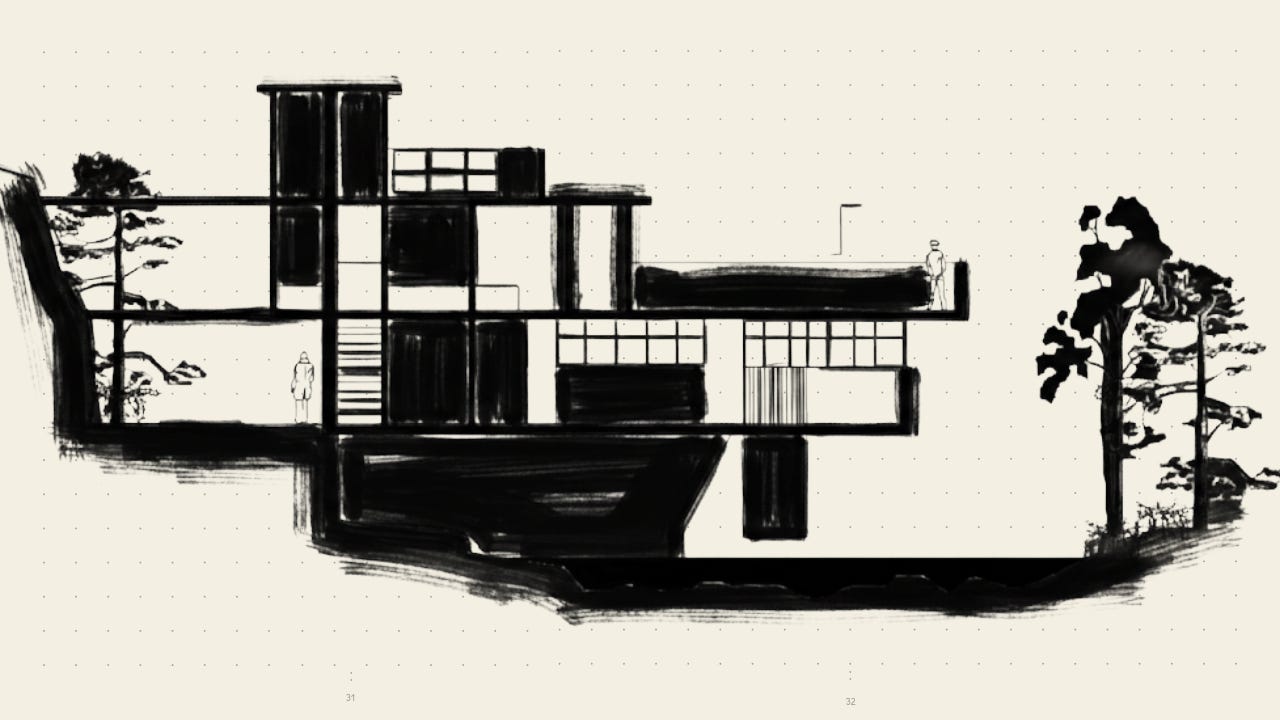
Frank Lloyd Wright’s architecture adhered to nine principles. There were two for eliminating the unnecessary (walls and decorations) and seven for integrating the essentials (nature, the foundation, heating, and lighting). These simple rules forced him to ‘stretch’ his design vocabulary without losing coherence. Rather than imitating the eclecticism of the times, he harmonized the essentials. The varied expression of a few pure ideas is why his designs still feel modern a century later.
To reduce the number of necessary parts of the house and the separate rooms to a minimum, and make all come together as enclosed space - so divided that light, air, and vista permeated the whole with a sense of unity.
— Frank’s first principle.
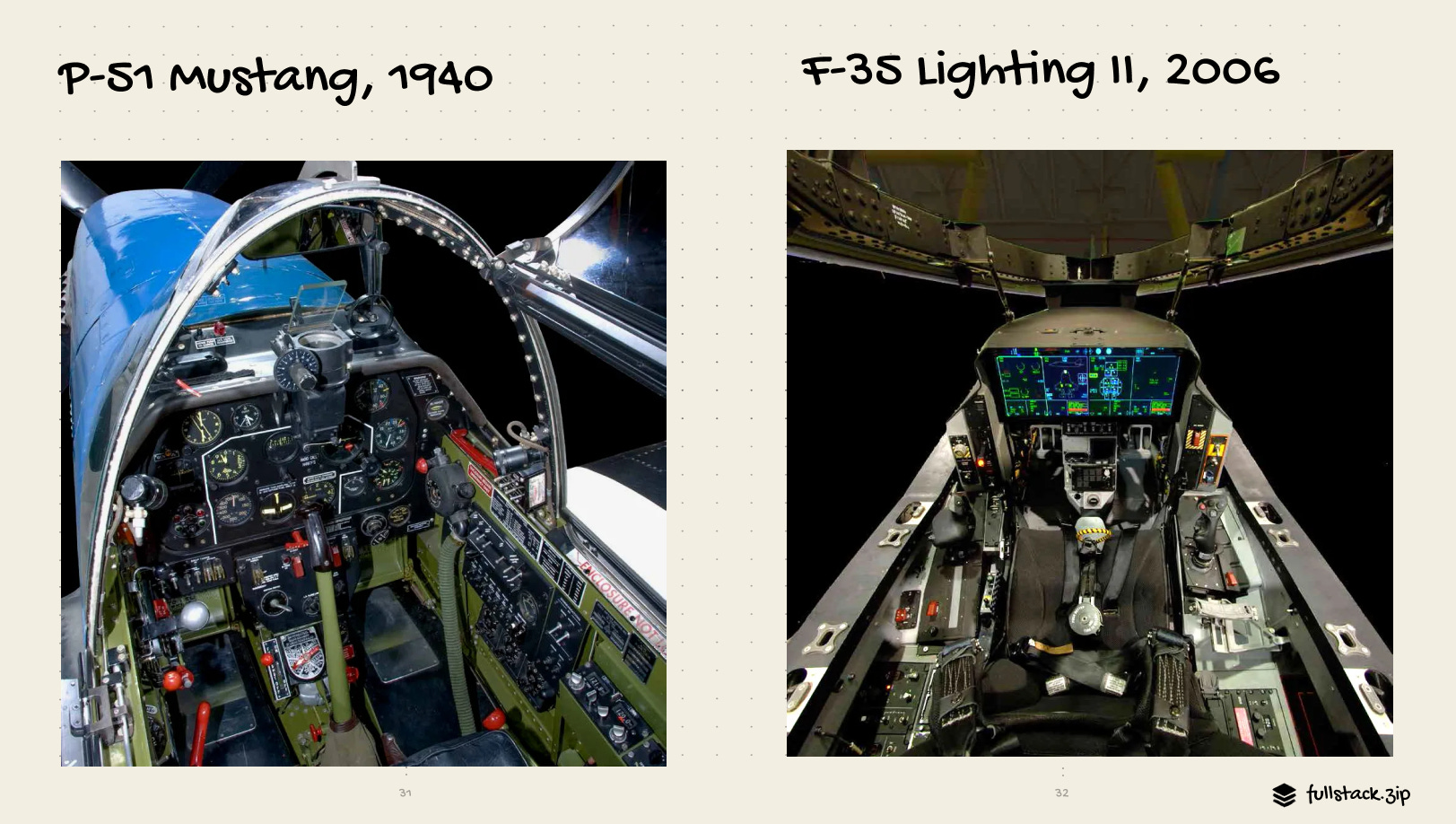
The French aviator and literary star Antoine de Saint-Exupéry shared Wright’s appreciation for unity. He believed the role of engineers was to remove and refine away until only a cohesive whole remained. He witnessed this process with his planes. During his early flying career in the 1920s, the cockpits were a chaotic mess of raw gauges, exposed levers, and instruments scattered without much visual logic. By the time he wrote his memoir in 1939, they had smoothed so much complexity that he marveled at how he now spent more time thinking about flying and less on gadgetry. Seeing this transformation undoubtedly led to his now-famous anthem of simplicity.
Have you ever thought, not only about the airplane but about whatever man builds, that all of man’s industrial efforts, all his computations and calculations, all the nights spent over working draughts and blueprints, invariably culminate in the production of a thing whose sole and guiding principle is the ultimate principle of simplicity? [...] If anything at all, perfection is finally attained not when there is no longer anything to add, but when there is no longer anything to take away, when a body has been stripped down to its nakedness.
— Wind Sand And Stars
Simplicity is not a philosophical ideal that only appeals to artists or children.
The creators of our physical and digital world recognize its power.
Make no mistake, though — the road through complexity is unglamorous and difficult.
We’ll be exploring how to navigate our way towards simple solutions in the next few Offline editions.
One thing to carry with you into the week:
» If your solution still feels complicated, you probably haven’t finished thinking yet.

Examples of other builders who value simplicity?
Jony Ive comes to mind for me.