
Elon keeps Optimus it simple
Enforcing The Algorithm during design

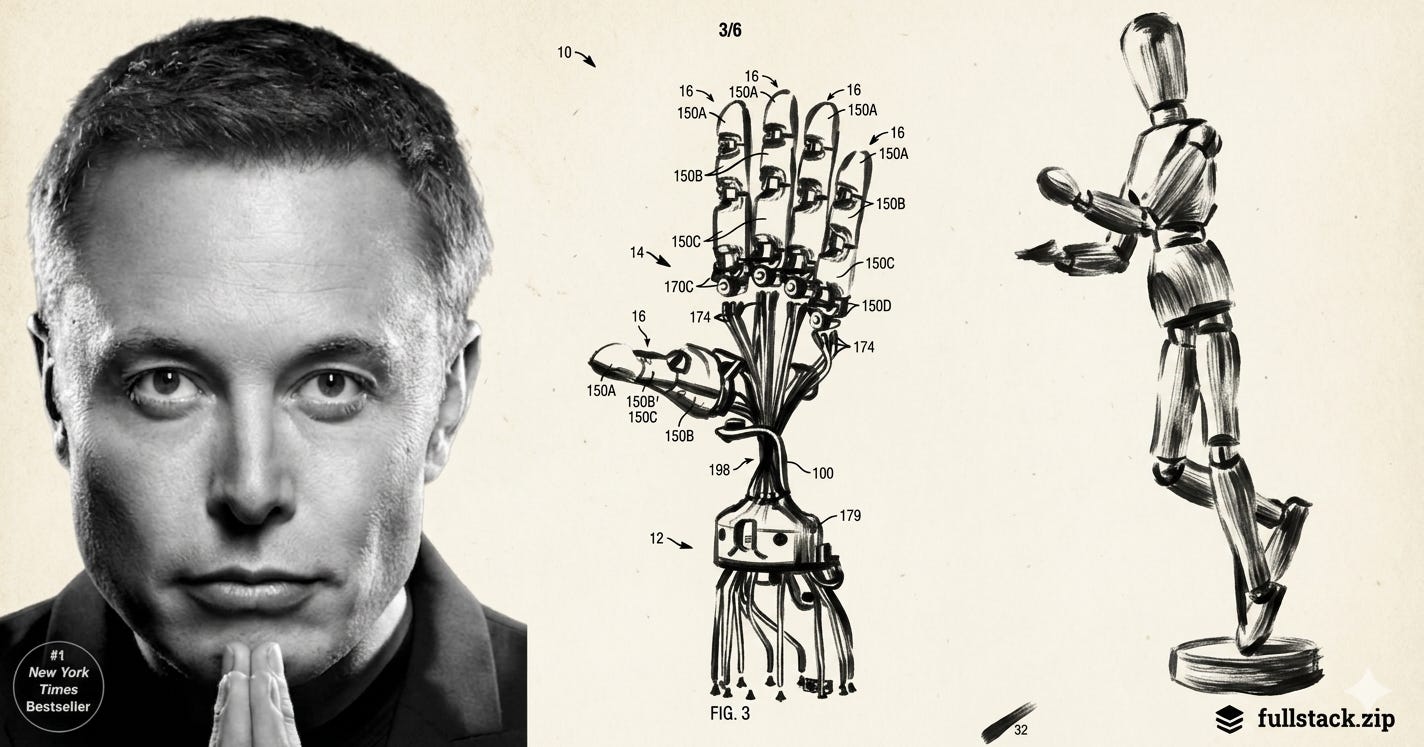
Learn from the most successful businessman of the century, sans drama: get Walter Isaacson’s Elon Musk as an ebook and search “simpl.” The 688-page canon becomes a thin manual on simplicity with fifty-one detailed examples.
Or just keep skimming this =]
These examples follow the playbook that Elon runs across his companies, officially called “The Algorithm”:
Question every requirement
Delete as many as possible
Simplify
Go faster
Automate
Last issue explained how Elon resorted to this playbook to solve bottlenecks at PayPal, Starlink, and SolarCity.
The same framework also works proactively, as we see with Tesla’s Optimus robot.
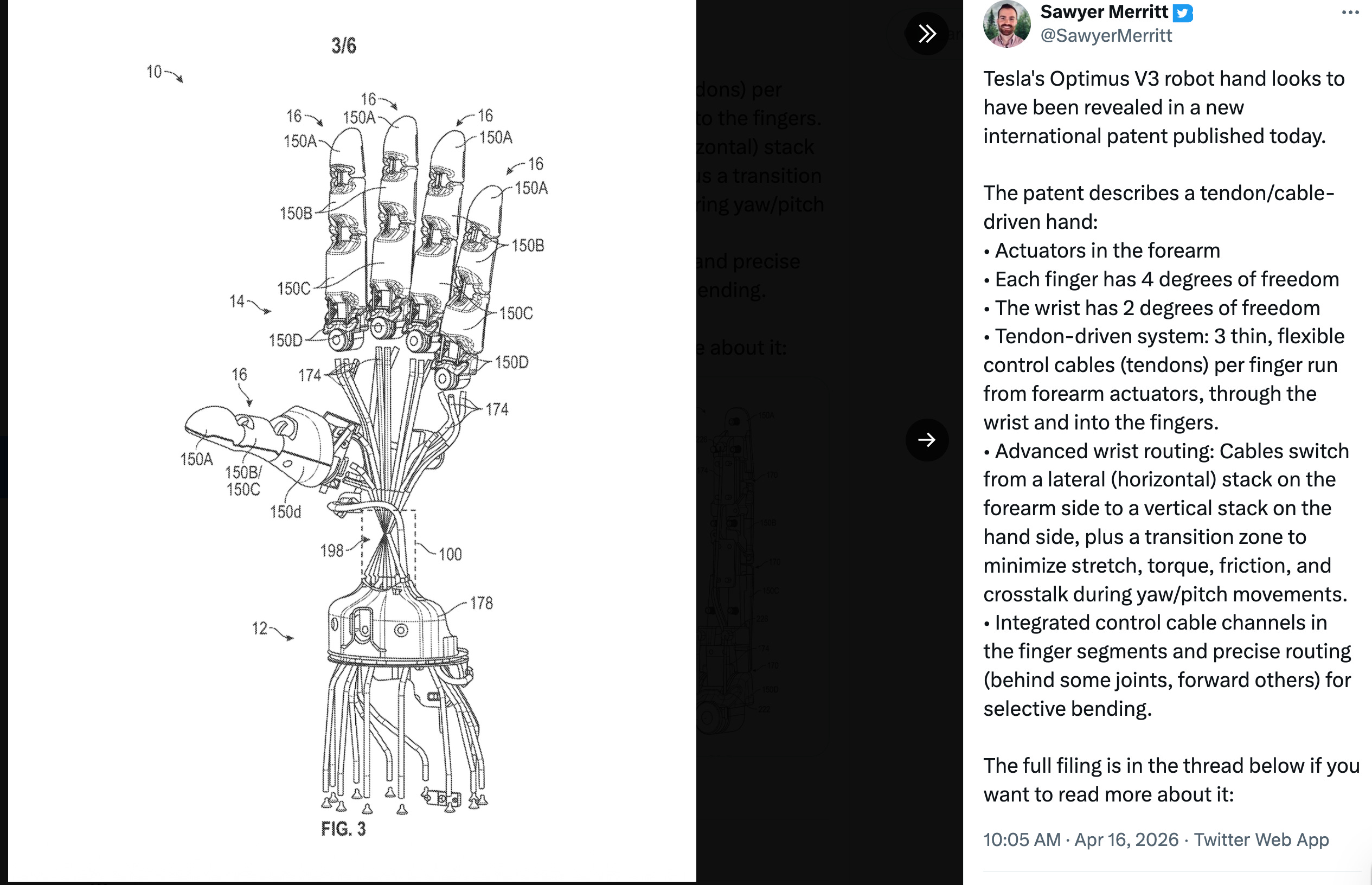
The one requirement Elon mandated was that it should resemble a human. But the designers, already students of The Algorithm, knew to eliminate. When designing the hand, they initially tried to omit the pinky, which seemed like overkill. They quickly realized that it made the robot too creepy, so they added it back.
This satisfied Elon’s corollary that 10% of eliminated parts should be added back (otherwise you’re not cutting out enough).
Estimating costs early also helped the team surface unnecessary complexity. When they reported that the actuators for the wrist would balloon costs by 54%, Elon pushed back hard:
"This is a shitty design. Use the damn lift gate actuators from our cars, which we know how to make cheaply.”
They eventually settled on a more refined design that included two finger joints (not like our three), two degrees of wrist rotation (unlike our three), and cheaper parts.
Takeaway for engineers
It’s never too early to push back against complexity. Although many of the Optimus meetings indulged in distant-future planning scenarios (like robots on Mars), Elon used cost to bring things back to earth.
We engineers usually don’t have as much visibility into costs, but we know how long things take. So when a PM proposes something complicated to placate a demanding client, it’s on us to push back about how much time that extra feature will take. Even better: explain how the real solution to going faster is not to add more parts, but to remove them and prevent more from being added so carelessly.
More
Elon keeps it simple (fullstack.zip)
Elon Musk, Walter Isaacson (amazon.com)
How Elon Works, Founders Podcast (youtube.com)